

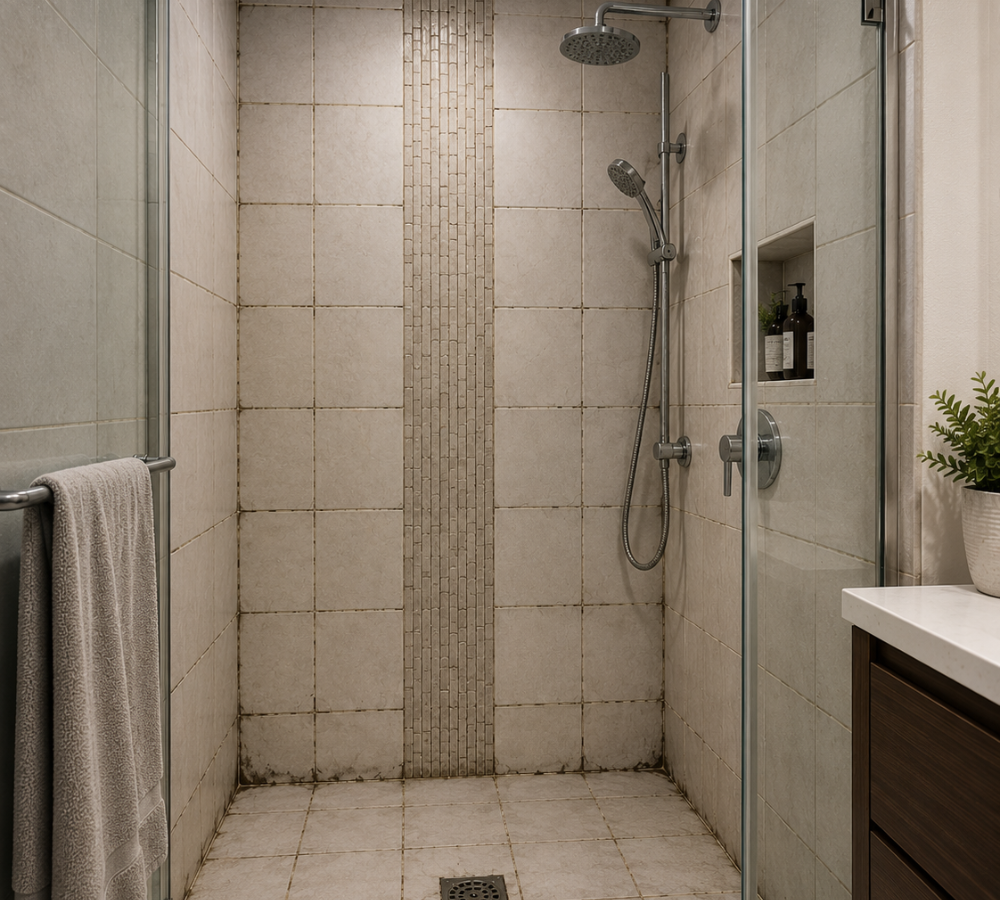
Cracked grout, recurring mould, loose tiles, musty smells, and water leaking outside the shower are some of the clearest warning signs your shower needs regrouting. These issues may seem cosmetic at first, but damaged grout can allow moisture to seep behind tiles and slowly cause expensive structural damage.
The good news is that early regrouting can often stop leaks, restore the appearance of your shower, and prevent the need for a full bathroom renovation. Knowing what signs to look for can help you act before minor grout problems turn into major repairs.
When Your Shower Starts Smelling Damp All the Time
A clean shower should not constantly smell musty. If you notice a lingering damp odour even after cleaning, moisture may already be trapped beneath the tiles or inside deteriorating grout lines.
This usually happens gradually. Old grout becomes porous over time, especially in high-moisture bathrooms. Once water starts penetrating beneath the surface, the area can stay damp long after the shower is used.
Many homeowners ignore this early warning sign because there are no visible leaks yet. However, trapped moisture often creates the perfect environment for mould growth and hidden water damage.
Professional grout repair specialists often identify persistent damp smells as one of the first indicators that a shower needs regrouting.
The Mould Keeps Coming Back to the Same Spots
It is normal to see small amounts of mould in bathrooms occasionally. What is not normal is cleaning mould repeatedly only for it to return to the exact same corners, grout lines, or edges within days.
This usually means the moisture problem is deeper than the surface.
Once grout starts breaking down, it absorbs water instead of repelling it. Mould spores settle into the porous material, making them much harder to remove through ordinary cleaning.
You may especially notice:
- Blackened grout joints
- Mould gathering around silicone edges
- Dark patches near the shower base
- Mould returning despite ventilation
At this stage, scrubbing harder rarely solves the issue. Regrouting removes the moisture-damaged material completely and restores the waterproof barrier between tiles.
Many people also combine regrouting with professional tile and grout cleaning services to refresh stained surfaces throughout the bathroom.
Cracked Grout Is Never “Just Cosmetic”
Hairline grout cracks are one of the most overlooked shower problems. Because the tiles themselves still look intact, many homeowners assume the damage is minor.
In reality, cracked grout creates direct pathways for water to travel behind the tiles.
Even small gaps allow moisture to seep into surrounding surfaces every single day. Over time, this can weaken adhesives, damage plaster, and affect timber structures hidden behind the bathroom walls.
If left untreated, you may eventually notice: soft walls beside the shower, bubbling paint, water stains, loose tiles, peeling skirting boards.
This is why regrouting is often far cheaper than delaying repairs. Addressing grout failure early can prevent major structural work later.
Your Tiles Feel Loose or Sound Hollow
Tiles should feel solid underfoot. If certain tiles move slightly when stepped on or sound hollow when tapped, there is a strong chance water has already affected the adhesive underneath.
This usually happens after grout deterioration has allowed moisture to slowly penetrate below the tile surface.
The problem tends to worsen quickly because loose tiles create even more movement, which causes additional grout cracking. It becomes a cycle of ongoing damage.
Many homeowners searching for leaky shower repair services first notice something feels “off” under their feet before they see an actual leak.
The earlier the issue is addressed, the more likely the existing tiles can be preserved.
Water Is Escaping Outside the Shower Area
This is one of the clearest signs your shower needs urgent attention.
You may notice:
- Water pooling outside the shower
- Damp carpet in nearby rooms
- Peeling paint on adjacent walls
- Swollen skirting boards
- Stains on ceilings below upstairs bathrooms
In many cases, the shower itself is not cracked. The real issue is failed grout and sealing.
Once grout loses its waterproofing ability, water slowly escapes every time the shower is used. Because the damage happens gradually, homeowners often do not realise how serious it has become until structural issues appear.
Professional grout repair services in Auckland can often stop these leaks without requiring a full bathroom renovation, especially when caught early.
When Your Grout Always Looks Dirty No Matter How Much You Clean
If your grout permanently looks dark, stained, or grimy despite regular cleaning, the issue may not be surface dirt anymore.
- Soap residue
- Minerals
- Oils
- Mould spores
- Moisture
Over time, the grout becomes deeply discoloured and impossible to fully restore through scrubbing alone.
This is where many homeowners accidentally make the problem worse. Harsh chemicals and aggressive scrubbing can slowly erode grout further, increasing porosity and accelerating deterioration.
Regrouting not only improves the appearance of the shower but also restores hygiene and moisture resistance.
Small Shower Problems Become Big Bathroom Repairs
One of the biggest mistakes homeowners make is waiting until visible leaking occurs before taking action.
The reality is that grout failure usually starts months or even years earlier.
What begins as:
- minor cracking,
- slight mould,
- or small discolouration
can eventually lead to:
- rotting timber,
- damaged waterproofing,
- loose tiles,
- mould behind walls,
- and expensive bathroom reconstruction.
This is why early intervention matters so much. Regrouting is often a preventative solution, not just a cosmetic one.
Why Regrouting Is Often Better Than Full Renovation
Many people assume a leaking shower automatically means the entire bathroom needs replacing. That is not always true.
If the tiles are still structurally sound, professional regrouting can often:
- stop leaks,
- improve waterproofing,
- restore appearance,
- and extend the life of the shower significantly.
Compared to a full renovation, regrouting is faster, less disruptive, and far more cost-effective.
That is why many homeowners contact leaky shower repair Auckland professionals before considering complete bathroom replacement.
Final Thoughts
Showers rarely fail overnight. The warning signs usually appear gradually through cracked grout, persistent mould, damp smells, loose tiles, and small leaks that worsen over time.
Recognising these issues early can help you avoid expensive structural damage and unnecessary bathroom renovations. In many cases, professional regrouting is enough to restore the shower, improve waterproofing, and extend the life of your bathroom for years.
If you have noticed any of these warning signs, speaking with experienced grout repair Auckland professionals can help you identify the problem early and prevent more serious damage later on. Get in touch with GroutWork today.
FAQs
Do I have to remove all old grout before regrouting?
Yes, damaged or loose grout should generally be removed before new grout is applied. Applying fresh grout over weakened grout often leads to poor adhesion and recurring problems. Proper preparation helps ensure the new grout lasts longer and seals the shower effectively.
How do you know if your shower needs regrouting?
Common signs include cracked grout, recurring mould, loose tiles, damp smells, leaking water outside the shower, and permanently stained grout lines. These issues often indicate that moisture is penetrating behind the tiles.
What are common grouting mistakes?
Some of the most common mistakes include:regrouting over damaged grout, using the wrong grout type, failing to seal grout properly, ignoring early cracks, using harsh cleaning products that weaken grout and poor grout work can shorten the lifespan of the shower and lead to hidden water damage.
What should you not clean grout with?
Avoid using overly abrasive brushes, strong acidic cleaners, or excessive bleach on grout. These products can weaken grout lines and strip away protective sealants over time.
