

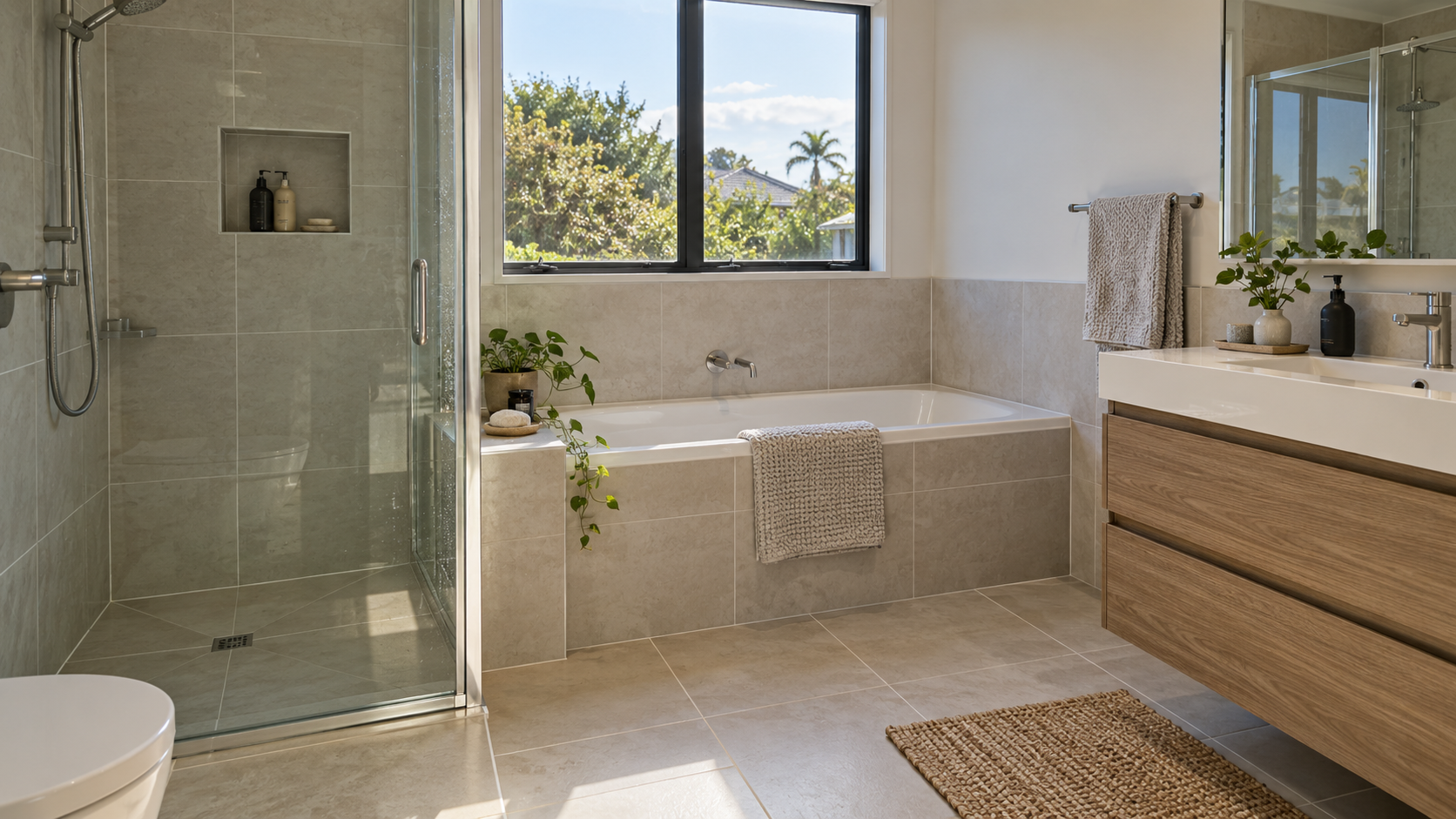
The best way to make bathroom tiles last longer is to keep both the tiles and grout clean, deal with damaged grout early and prevent moisture from causing problems behind the tiled surface. Regular tile and grout cleaning removes the build-up that can leave bathroom surfaces stained and neglected, while timely grout repairs help protect the areas between the tiles. This guide looks at how these two forms of tile maintenance work together and when cleaning is no longer enough.
Why Does Bathroom Grout Matter So Much?
It is easy to think of grout as the part of the bathroom that only needs attention when it looks dirty. In reality, its condition tells you quite a bit about what is happening around the tiles.
Grout can collect moisture and residue because it sits in the joints between tiles. Once it becomes heavily stained, mouldy or starts to crumble, cleaning may no longer be enough.
How Does Regular Tile and Grout Cleaning Help?
Regular cleaning is not just about keeping the bathroom looking fresh.
Dirt, soap residue and moisture tend to settle into grout lines much more readily than they do on the surface of a tile. A bathroom floor might look reasonably clean after mopping while the grout around each tile has gradually become darker.
This is where professional tile and grout cleaning has a role.
GroutWork uses specialised equipment and professional-grade cleaning methods to remove embedded dirt, stains, mould and discolouration from bathroom tiles and grout. The process is designed to clean both surfaces rather than concentrating only on the tile itself.
Regular cleaning can also make problems easier to spot. When years of staining are removed, cracks, missing grout or areas of deterioration become much more obvious.
What Should You Do About Grout That Keeps Getting Dirty?
If grout becomes dirty again soon after cleaning, don’t automatically assume that it simply needs to be scrubbed more often.
Look at what is happening in the bathroom.
- Is the shower staying damp for long periods?
- Is mould appearing in the same places?
- Are some grout joints cracked or starting to disappear?
- Does water seem to collect around a particular section?
Repeated staining can sometimes be a sign that the grout itself has deteriorated or that moisture is getting where it shouldn’t.
In a bathroom with sound grout, regular maintenance and professional cleaning can make a significant difference. If the grout is failing, however, continuing to clean it will not restore the material. That is where regrouting becomes a more appropriate solution.
When Should Bathroom Grout Be Repaired or Replaced?
Not every stained grout line needs replacing.
If the grout is still firm and intact, grout cleaning may be all that is needed. Once you start seeing cracks, crumbling sections or areas where grout has disappeared completely, the situation changes.
Trying to clean deteriorated grout back into good condition is unlikely to work. The underlying material has already worn out beyond repair.
Regrouting removes the damaged material and gives the joints a fresh finish. For shower areas where moisture exposure is a constant concern, epoxy regrouting can also be considered as a more durable option.
The key is knowing which problem you’re dealing with. Cleaning and regrouting are not interchangeable jobs.
How Can You Prevent Water Damage Around Bathroom Tiles?
Keeping the bathroom dry after use helps, but it is not enough to ignore signs of a leak.
If water is escaping from the shower area, grout may be one of the visible signs rather than the actual cause. Failed grout or silicone, movement and problems with waterproofing can all contribute to a leaky shower.
Look out for:
- Grout that repeatedly cracks after being repaired
- Mould that keeps returning in one area
- Dampness outside the shower
- Water appearing where it should not
- Tiles or grout showing unexplained changes
If these signs are present, it makes sense to investigate the source rather than continuing to clean the affected area.
GroutWork’s leaky shower repair and waterproofing services are designed to address moisture problems at their source. This matters for tile longevity because keeping water where it belongs is part of protecting the tiled surface.
What Can You Do Between Professional Cleaning Visits?
Bathroom maintenance does not need to become a daily project.
Wipe down wet surfaces where practical and avoid allowing soap residue and standing water to build up. Regularly clean the tiles and grout rather than waiting until the bathroom looks heavily stained.
Pay particular attention to the shower because it receives the most moisture and product residue.
Also keep an eye on the grout lines while cleaning. You are more likely to notice a small crack or missing section when you see the area regularly.
Professional tile and grout cleaning services can then deal with the deeper build-up that ordinary maintenance does not remove.
A Little Maintenance Can Add Years to Your Bathroom
Bathroom tiles are built to handle moisture, but the tiled surface still needs care. Keeping grout clean, watching for cracks and dealing with leaks early can help prevent avoidable deterioration.
Regular tile and grout cleaning is a useful part of that process because it removes the build-up that makes grout look tired and can hide early signs of damage. When cleaning is no longer enough, repairing the grout or addressing a waterproofing problem is the sensible next step.
If your bathroom tiles still look sound but the grout has become stained, mouldy or difficult to clean, it may be time to have the surface assessed rather than assuming the whole bathroom needs replacing.
Give Your Bathroom Tiles a Longer Life
At GroutWork, we help Auckland homeowners look after tiled bathrooms through professional grout and tile cleaning, regrouting, epoxy regrouting and leaky shower repair and waterproofing. If your bathroom is looking tired or the grout is showing signs of damage, we can assess the condition of the tiled surface and help determine what it actually needs. Get in touch with us if you need an assessment by professionals.
FAQ
How long should bathroom tiles last?
Good-quality bathroom tiles can last for many years when they are properly installed and maintained. Their lifespan also depends on the condition of the grout, moisture exposure and whether underlying problems such as leaks are dealt with promptly.
How do you bring bathroom tiles back to life?
Start with professional tile and grout cleaning if the tiles are sound but covered in staining, mould or built-up residue. If the grout is cracked or deteriorated, cleaning may need to be followed by regrouting or another form of restoration.
Can bathroom tiles be updated without removing them?
Yes. If the tiles themselves are still in good condition, cleaning the tiles and grout, restoring the grout or changing the grout finish can significantly improve the appearance without removing the existing tiles.
How do professionals clean bathroom tiles and grout?
Professionals use specialised equipment, professional-grade cleaning solutions and suitable techniques to remove embedded dirt, stains, mould and discolouration from both tiles and grout. The approach depends on the condition of the surfaces being cleaned.
What should you not use to clean bathroom tiles?
Avoid harsh or highly abrasive cleaning methods that can damage tile surfaces or grout. It is also best not to use stronger chemicals simply because the grout looks dirty, as the problem may require professional cleaning or repair rather than more aggressive scrubbing.
