
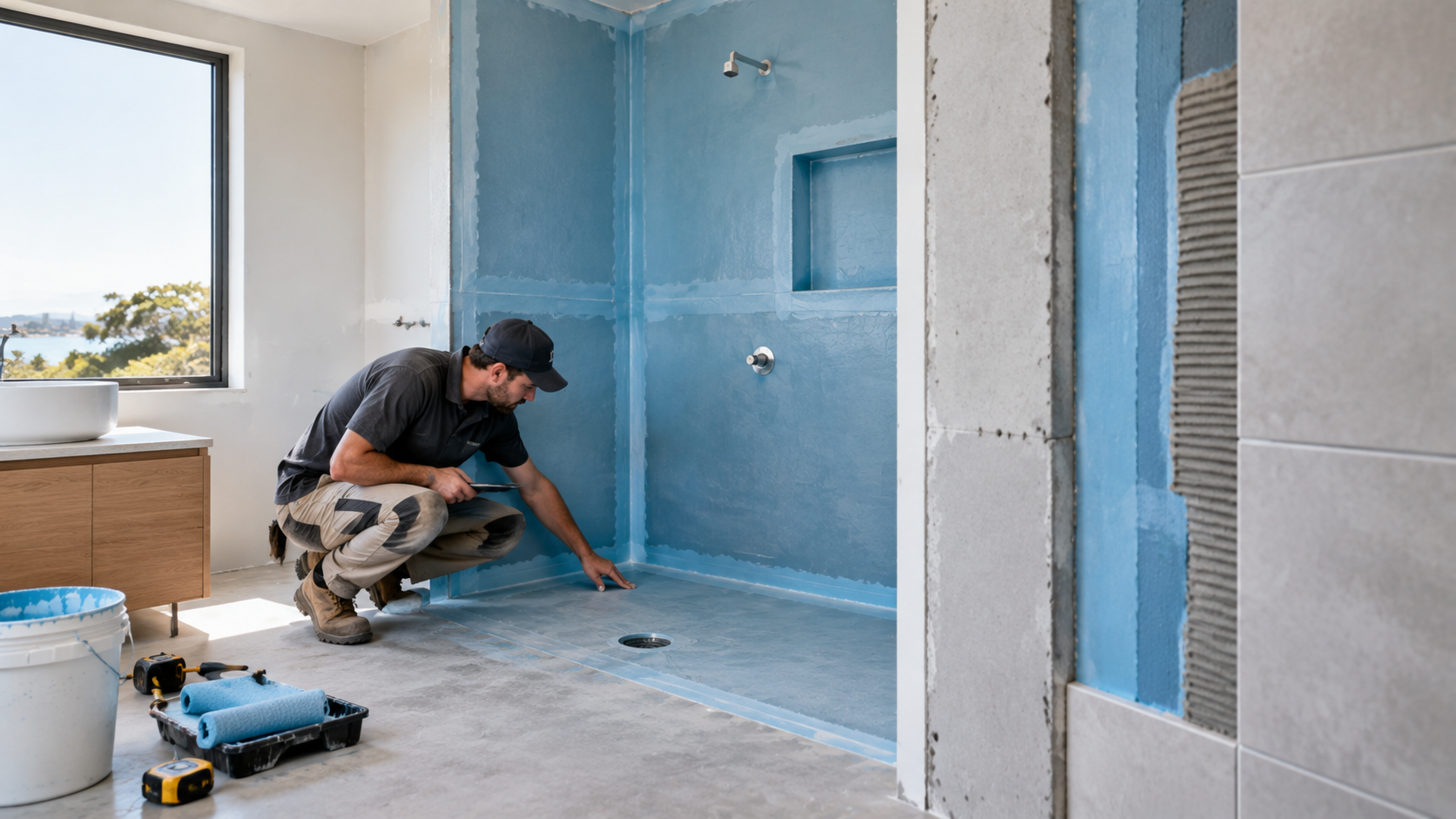
Choosing a suitable waterproofing Auckland specialist is an important part of any bathroom project because the waterproofing system sits behind the finished tiles and cannot be properly checked once the bathroom is complete. A qualified waterproofer understands how the membrane system, substrate, drainage points, junctions and penetrations need to work together and what documentation may be required for consented work.
The term “council approved waterproofer” is often used loosely, so it is worth knowing what you are actually paying for. In this article, we discuss why you should choose a council approved waterproofer in Auckland.
What Does Council Approved Waterproofer Actually Mean?
Auckland Council does not simply give a permanent blanket approval to every contractor who describes themselves as a “council approved waterproofer”.
For consented building work, waterproofing forms part of the wider building compliance process. Depending on the project, the waterproofing installation may need to be inspected and supporting documentation may be required to demonstrate that the work has been completed correctly.
This is why it is better to look at the contractor’s qualifications, experience with the particular membrane system and ability to meet the requirements of the project rather than relying on the phrase “council approved” by itself.
For homeowners, the practical question is straightforward: can the person carrying out the waterproofing install the system correctly and support the compliance requirements of the job?
Benefits of Choosing a Council-Approved Waterproofer in Auckland
The main benefit of choosing a council approved waterproofer is having someone who understands that waterproofing is a technical part of the bathroom construction rather than simply another coating applied before tiling.
Compliance and Documentation
Where building consent applies, waterproofing needs to form part of the documented construction process. Depending on the project and the waterproofing system, this can include inspections and supporting documentation such as a Producer Statement Construction (PS3).
Working with a waterproofer who understands these requirements can help prevent problems later, particularly when documentation is needed for the completed work.
Correct Waterproofing System Installation
A waterproofing membrane is a system. The substrate needs to be suitable and prepared correctly. Primers, membranes, reinforcing materials and compatible products need to be used according to the system manufacturer’s requirements.
Poor preparation can undermine an otherwise good membrane. So can incorrect coverage, incompatible products or inadequate detailing around vulnerable areas.
Experienced waterproofing specialists Auckland homeowners engage should know the system they are installing and follow its specifications rather than treating different products as interchangeable.
Proper Detailing Around Vulnerable Areas
Most bathroom waterproofing does not fail in the middle of a flat wall.Greater attention is needed around changes in direction, floor-to-wall junctions, internal corners, pipe penetrations, drains and shower areas. These locations need to be detailed so the waterproofing remains continuous rather than leaving gaps where water can find a way through.
This is particularly relevant when bathroom tiling and waterproofing in Auckland, work is being completed as part of the same project. The waterproofing needs to be properly prepared before the tile installation begins.
Less Risk of Hidden Moisture Damage
The most expensive waterproofing problems are often the ones you cannot see. To learn more, see our blog on warning signs of damaged shower grout.
Once tiles have been installed, the membrane is hidden. If it was incorrectly prepared or installed, the resulting moisture damage may not become obvious until there are stains, mould, loose tiles or a leak elsewhere in the building.
Good waterproofing is therefore preventative work. It protects the substrates behind the finished bathroom rather than waiting for water damage to become visible.
Why Waterproofing Expertise Matters Before Bathroom Tiling
Tiles and grout create the finished surface, but they are not the primary waterproof barrier behind a tiled wet area.
That distinction matters during bathroom renovations.
A tiled shower can look perfectly finished while having a problem underneath. If the waterproofing has not been installed correctly, replacing grout or applying sealant later will not compensate for a defective membrane system.
This is why waterproofing and tiling need to be considered together. The waterproofing needs to be completed correctly before the tile installation covers it, with the appropriate preparation and detailing carried out at each stage.
For Auckland waterproofing services, this technical sequence is one of the reasons contractor experience matters. The work that cannot be seen after completion is often the work that matters most. At GroutWork, our waterproofing specialists focus on getting those hidden details right.
Before You Hire a Waterproofer, Check These Five Things
A good waterproofing job starts with the decisions made before the membrane goes down. Before hiring a contractor, make sure you can get clear answers to these five points:
1. Waterproofing system
What membrane system will be used, and is it suitable for the wet area being waterproofed?
2. Substrate preparation
How will the surface be prepared? Dust, moisture, contamination, movement and unsuitable substrates can all affect membrane performance.
3. Corners and penetrations
How will floor-to-wall junctions, corners, pipe penetrations and other vulnerable areas be detailed? These should be part of the waterproofing system, not improvised on site.
4. Inspection and documentation
If the project requires consent, inspection or supporting documentation, who is responsible for providing it and at what stage?
5. Responsibility before tiling
Who is responsible for the waterproofing before the tiler starts? This should be clear when multiple trades are involved.
The simple test: if a contractor cannot clearly explain what system they are using, how it will be installed and how the work fits into the project requirements, keep looking.
When Is Professional Waterproofing Required?
The need for professional waterproofing depends on the scope of the work and the condition of the existing bathroom.
New tiled wet areas, bathroom alterations and projects involving changes to existing waterproofing need to be assessed according to the relevant building requirements.
For an existing shower, the situation can be different. If you have a leak, recurring dampness or grout that keeps failing, the issue may be related to the existing waterproofing rather than the grout itself.
This is where leaky shower repair in Auckland can involve more than replacing visible grout or silicone. The source of the moisture needs to be identified before deciding how the shower should be repaired.
The same applies to shower base leak repair. A visible leak does not necessarily tell you where water is entering the structure. A proper assessment helps establish whether the problem is with the grout, waterproofing or another part of the shower assembly.
Protect the Work Behind Your Bathroom Tiles
At GroutWork, we approach waterproofing as part of the complete tiled bathroom system.
Our Auckland services include
- waterproofing,
- bathroom tiling and waterproofing,
- regrouting,
- epoxy regrouting and
- leaky shower repairs.
If you are renovating a bathroom or dealing with a recurring shower leak, we can assess the condition of the area and determine what needs to be addressed before the problem becomes more extensive.
Frequently Asked Questions
What does a council-approved waterproofer do?
A suitable waterproofer installs wet-area waterproofing systems according to the relevant requirements and manufacturer’s specifications. For consented work, they should also understand the inspection and documentation requirements that apply to the project.
Does waterproofing require a building consent in Auckland?
Not every bathroom job requires building consent. It depends on the scope and nature of the proposed work. The project should be assessed against the applicable building requirements before work starts.
Why is professional waterproofing important under bathroom tiles?
The membrane protects the underlying building materials from moisture. Once tiles are installed, the membrane is hidden, so mistakes made during preparation or installation can be difficult and expensive to rectify later.
Can regrouting fix a leaking shower?
It depends on the cause. If damaged grout is allowing water into the tiled area, regrouting may form part of the repair. If the waterproofing system has failed, regrouting alone will not fix the underlying problem.
What should I ask a waterproofing specialist before hiring them?
Ask which waterproofing system they will use, how the substrate will be prepared, how corners and penetrations will be detailed and what inspection or documentation requirements apply to your project.
What is involved in shower base leak repair?
The first step is identifying where the water is coming from. Depending on the cause, the repair may involve grout, waterproofing or another component of the shower. Treating the visible leak without identifying its source can lead to repeat problems.
