

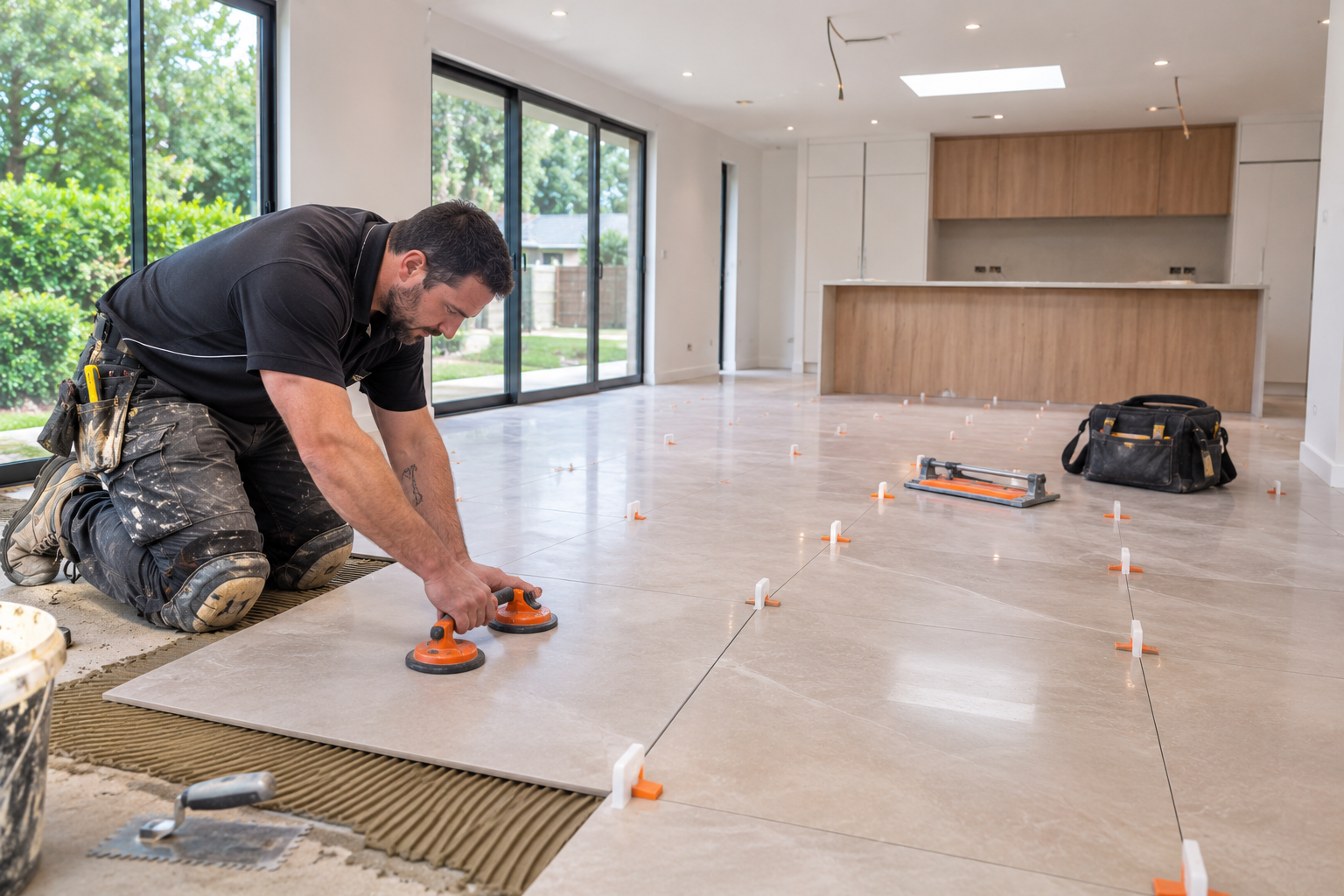
Hiring a professional tiler involves more than choosing tiles and deciding on a pattern. The quality of the surface preparation, tile placement, grout joints and waterproofing can all affect how well the finished area performs over time. Before hiring tiling services in Auckland, you should understand what the job includes, how the tiler handles technical details and what to check before work begins. This is particularly important for bathrooms and other wet areas, where poor installation can lead to loose tiles, water penetration and expensive repairs.
What Do Professional Tiling Services Include?
Professional tiling covers the preparation and installation work needed to achieve a level, durable tiled surface. The exact scope depends on the area, tile material and condition of the existing substrate.
Typical services include:
- Surface preparation: Checking the substrate, correcting uneven areas and ensuring the surface is suitable for tiling.
- Tile layout and placement: Planning tile positions, cuts and joint spacing before fixing begins.
- Tile installation: Applying the appropriate adhesive and setting tiles according to the surface and product requirements.
- Grouting and finishing: Filling joints, finishing edges and sealing movement joints where required.
- Wet-area preparation: Coordinating waterproofing and tiling where bathrooms, showers or other wet areas are involved.
- Repair and replacement: Removing damaged tiles and replacing them where the underlying surface is suitable.
A professional tiler should explain which tasks are included in the quote. Preparation, waterproofing, removal of old tiles and waste disposal may be separate items, so confirm the scope before accepting the price.
Why Preparation Matters Before Tiling
Tiles can look perfectly aligned on installation day but still develop problems if the surface beneath them has not been prepared properly. Uneven substrates can cause inconsistent tile levels, while unsuitable surfaces may affect adhesive bonding.
Before installation, the tiler should check that the substrate is stable, clean and suitable for the selected tile and adhesive. Tile size also matters. Large-format tiles, for example, generally require closer attention to substrate flatness than smaller tiles.
The layout deserves equal care. Planning the starting point and tile cuts helps avoid narrow slivers at edges, awkward joins and poorly positioned features. These decisions are best made before adhesive is applied.
Bathroom Tiling and Waterproofing in Auckland
Bathroom tiling requires particular attention because water can reach the building structure if the wet-area system is poorly installed. Tiles and grout are not substitutes for a properly designed and installed waterproofing system.
When arranging bathroom tiling and waterproofing especially in Auckland, establish who is responsible for the waterproofing, what system will be used and how the work will be documented. The membrane must be compatible with the substrate and installed according to the manufacturer’s specifications and applicable requirements.
Before hiring, clarify these points:
- Waterproofing scope: Confirm which walls, floors and wet areas require waterproofing.
- Installation sequence: Establish when preparation, membrane application, curing, inspection and tiling will take place.
- Compliance documentation: Ask what records or producer statements will be provided where required.
- Responsibility for defects: Find out who will address problems if the waterproofing or tiling fails.
Experienced waterproofing specialists Auckland property owners engage should understand how the waterproofing system and tiling work together. Do not assume that every tiler is qualified or authorised to carry out every part of the waterproofing work. Confirm the relevant experience and responsibilities before the project starts.
How to Choose the Right Tiler in Auckland
Price matters, but it should not be the only deciding factor. A low quote may exclude essential preparation or finishing work, making the final cost higher than expected.
Consider these factors when comparing tilers.
Relevant experience: Look for experience with your specific project, whether it involves bathroom walls, shower floors, large-format tiles or a complete renovation.
Previous work: Ask to see completed projects with similar tiles and layouts. Pay attention to corners, edges, grout consistency and the alignment of tile joints.
Clear quotation: The quote should outline preparation, installation, grouting, finishing and any exclusions. Waterproofing, plumbing and removal work should be clearly identified.
Product suitability: Ask which adhesive, grout and waterproofing system will be used. Materials should suit the tile type, substrate and intended environment.
Communication and scheduling: Agree on start dates, project stages and access requirements. Bathroom work may also depend on plumbing, waterproofing inspections and curing times.
Warranty and documentation: Check what workmanship warranty applies and which product records or compliance documents will be supplied.
Common Tiling Mistakes to Avoid
Many tiling problems begin before the first tile is installed. Knowing what to watch for can help you avoid unnecessary repairs.
- Skipping surface preparation: Uneven or unstable substrates can contribute to poor bonding and uneven tile levels.
- Choosing materials by price alone: Adhesives and grout must be suitable for the tile and installation conditions.
- Ignoring movement joints: Appropriate movement joints help accommodate building movement and temperature changes.
- Rushing waterproofing: Membranes need correct application and sufficient curing time before subsequent work.
- Overlooking the quote details: Unclear exclusions can lead to disputes and unexpected costs.
If existing tiles are already loose, cracked or lifting, ask the tiler to investigate the cause before installing replacements. Covering the symptoms without addressing the underlying issue may lead to the same problem recurring.
What Should You Ask Before Hiring?
Before committing to a tiler, ask practical questions that clarify the work and help you compare quotes fairly.
- Have you completed similar tiling projects in Auckland or your city?
- What preparation will the substrate need?
- Which adhesive and grout products will you use?
- Who will carry out the waterproofing, if required?
- What is included in the quote, and what costs extra?
- How long will the project take, including curing time?
- What warranty and documentation will I receive?
A professional should be able to explain the proposed approach in straightforward terms. If the answers are vague, ask for clarification before work begins.
Arrange Professional Tiling Services with GroutWork
Choosing the right tiler means looking beyond the finished surface. Preparation, material selection, waterproofing coordination and careful installation all contribute to a result that performs well over time.
GroutWork provides tiling, waterproofing and bathroom renovation services across Auckland. If you are planning a new tiled area or updating an existing bathroom, contact our team to discuss your project and the work involved.
Contact GroutWork for a Consultation
Frequently Asked Questions
1. Why is hiring a professional tiler important?
A professional tiler understands substrate preparation, tile layout, adhesive selection, grout application and finishing details. This helps reduce installation errors and supports a durable, even finish. In wet areas, correct coordination with waterproofing is also essential.
2. What factors should I consider when choosing a professional tiler in Auckland?
Check the tiler’s relevant experience, previous work, quotation details, materials, availability and warranty. For bathrooms, confirm who is responsible for waterproofing and what compliance documentation will be provided where required.
3. What questions should I ask when hiring a professional tiler in Auckland?
Ask about surface preparation, tile and adhesive suitability, grout selection, waterproofing responsibilities, project duration and the full cost. You should also clarify what happens if damaged surfaces or other problems are discovered during the work.
4. What are the benefits of hiring a local Auckland tiler?
A local tiler can make site visits and project coordination easier, particularly when the work involves bathroom renovations or multiple trades. Local experience may also help with planning around the property’s condition and the practical requirements of the project. Always assess the tiler’s skills and work quality rather than relying on location alone.
Stay Updated with Groutwork New Zealand
Make Groutwork New Zealand a preferred source on Google to stay updated with expert grout and tile care tips, waterproofing advice, bathroom renovation insights and helpful home improvement guides.
